The Language of Thread- Part I
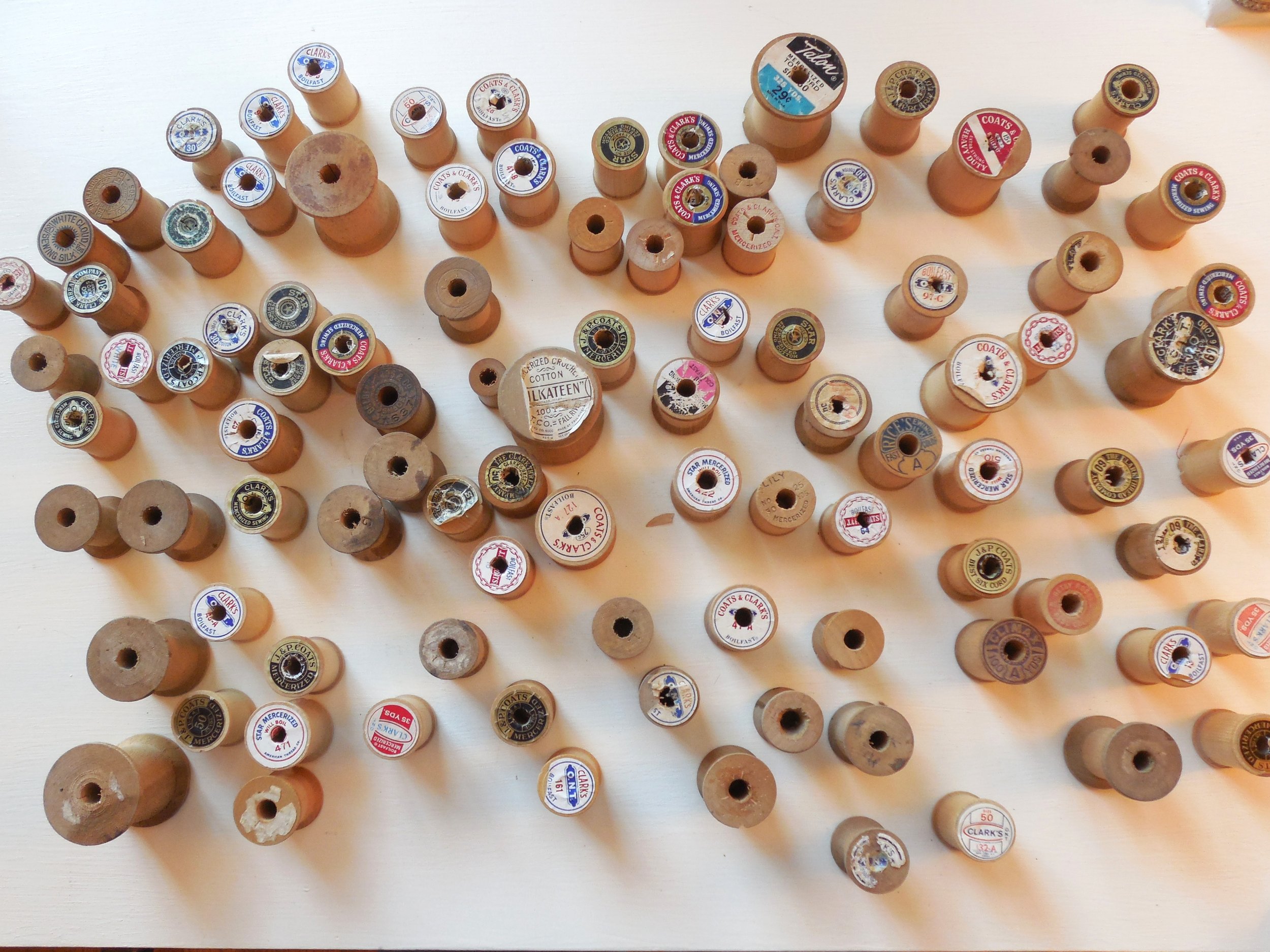
A spool of thread is a language. The tiny round labels on either end are full of words. Terms like ONT or mercerized are familiar, but not necessarily understood. Some are industry-wide standard terms, others proprietary brand language. There is a world of information in the label of a spool of thread. Let’s return to our pink spool of Coats and Clark’s to start the discussion.
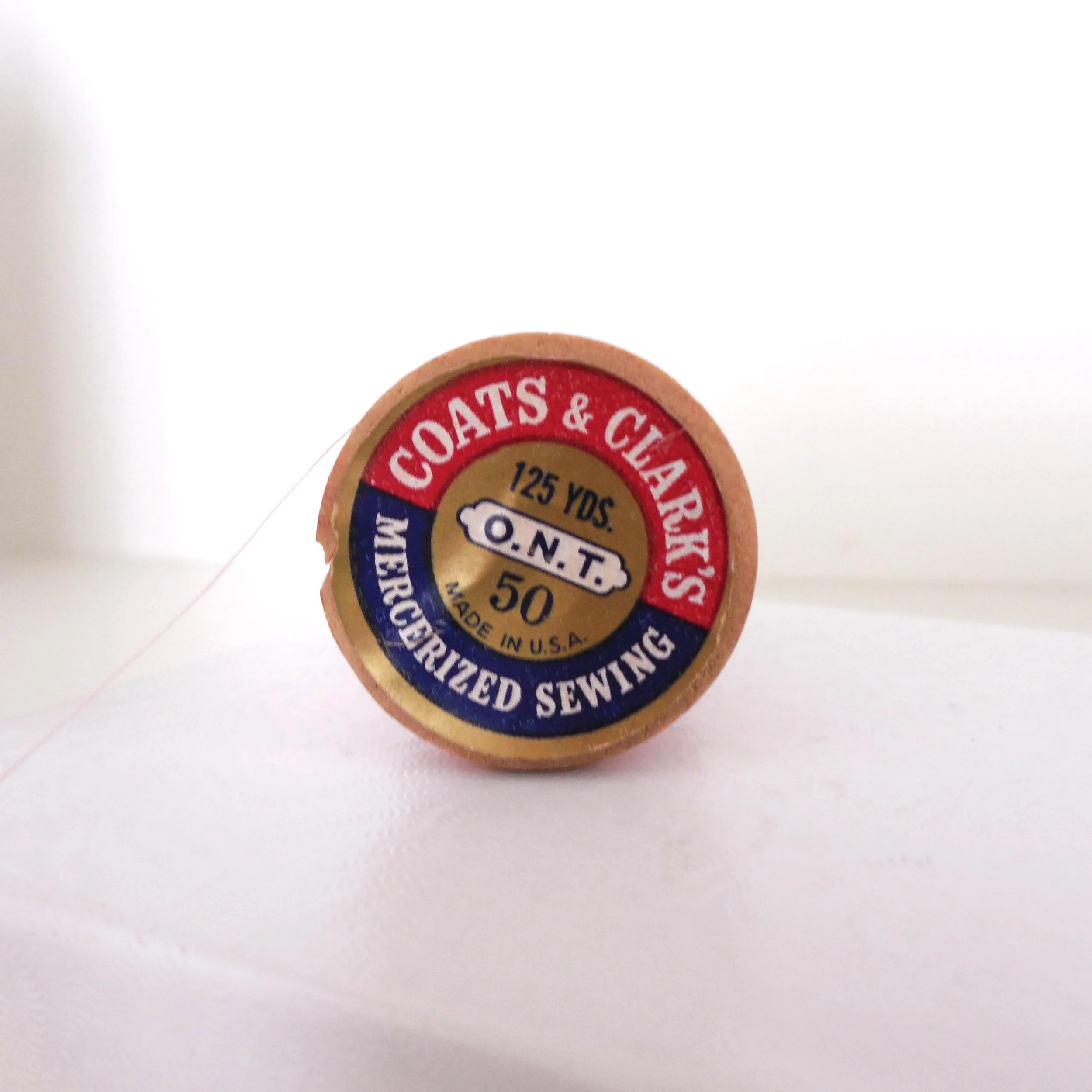
The red, blue, and gold label has the initials O.N.T. prominently displayed. What does that mean? Do I need to know in order to decide if this is the product I want? These letters are a brand-specific term that stand for Our New Thread. Manufacturer Clark & Co, long before they were part of Coats and Clark’s, coined the term in the second half of the 19th century to describe a fine, inexpensive cotton thread that was also strong enough to be used in the sewing machine, then another new technology for joining pieces of fabric. Around 1880 Clark’s O.N.T. appeared on the American market. This thread became the industry standard for machine sewing.
A second word on the label that tells me this is cotton thread is MERCERIZED. The process of mercerization was developed in the early 20th century to create an even stronger, smoother cotton thread. It consists of immersing cotton thread under tension into a lye solution (sodium hydroxide) to make it even finer and stronger. It also results in a more lustrous thread that takes dye more easily. I admit to simple admiration for a spool wound with mercerized cotton; it exhibits a characteristic sheen that is one of the joys of dressmaking.
The label on the spool of pink thread also has the number 50, which refers to the thread weight. This is an important number which helps choose a thread for a fabric of a certain weight and also guides the choice of sewing machine needle. The higher the number of the weight, the lighter and finer the thread. The lower the weight number, the heavier and thicker the thread. 50 wt thread is the workhorse of the sewing room, generally used for most clothing construction. A heavier thread, such as 30 wt, may be used for topstitching or buttonholes, a lighter thread, such as 100 wt, for delicate appliqué or other embellishment.
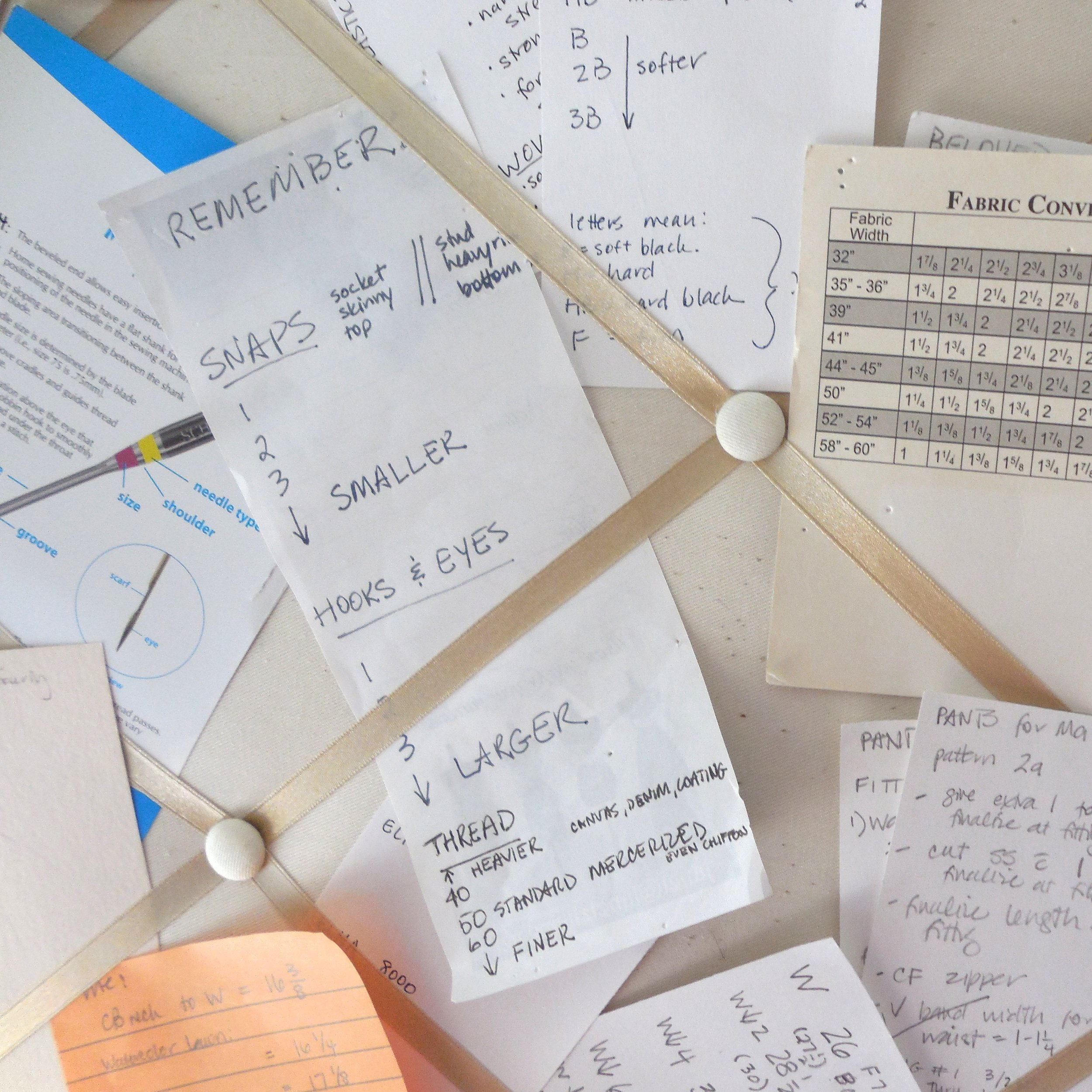
I am not embarrassed to admit that I keep a written chart in the workroom to remind me that thread weight gets lighter as the number increases. Keep in mind that hooks and eyes get bigger and heavier as the size number increases, snaps get smaller, and as if that’s not enough, buttons get bigger as the size number increases.
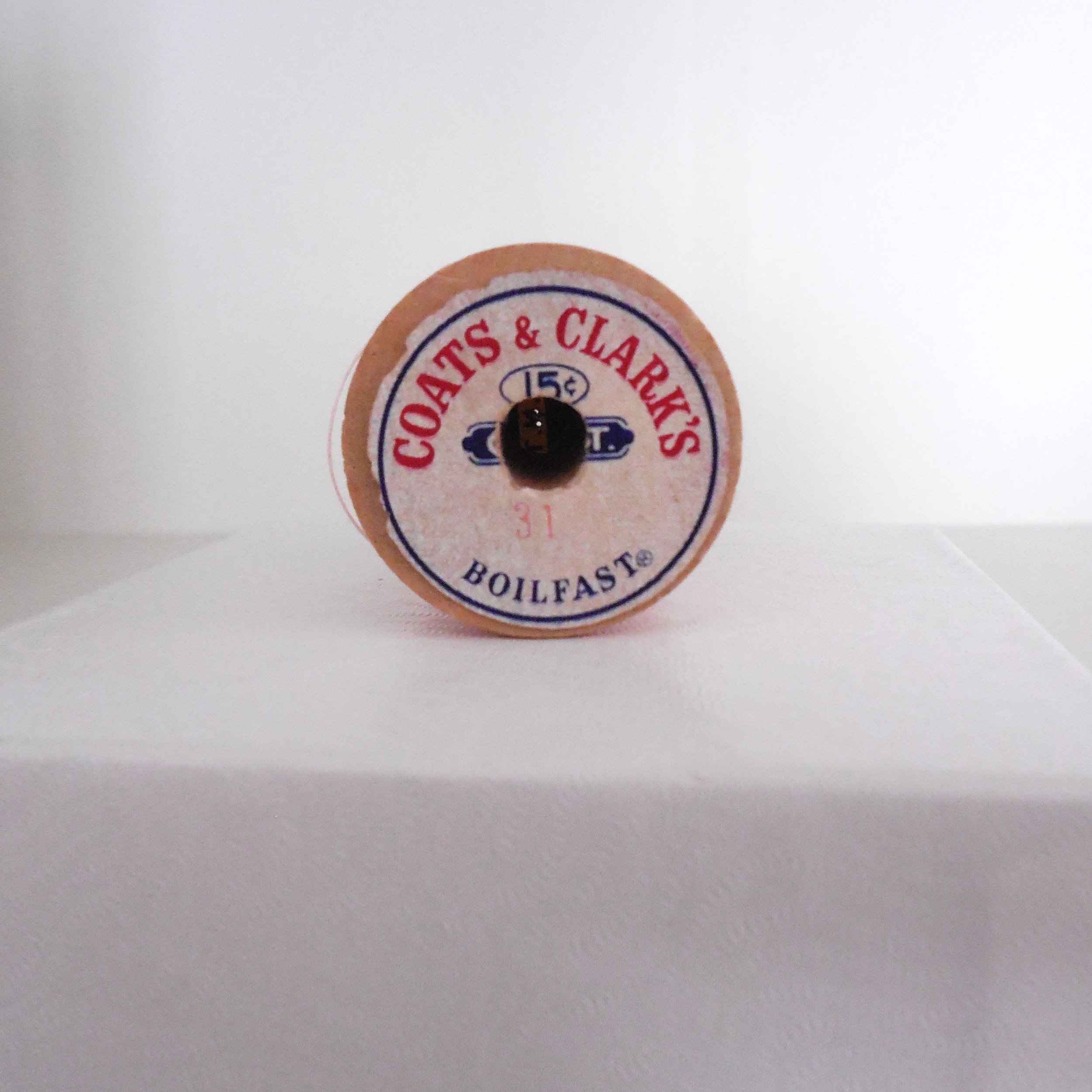
Our pink spool also bears the term BOILFAST®, a registered mark which therefore belongs to Coats and Clark’s. It refers to a chemical treatment of the thread that preserves its color and prevents bleeding, even when exposed to boiling water, a standard laundering technique in earlier periods. Other brands of thread may share this quality, and might be labeled ‘Will Boil’ or ‘Fast to Boiling.’
Let’s pause here to say that to read the label of a spool of thread is to enter a world rarely noticed when we unravel a length and thread a needle. There’s even more to this tiny label, which we’ll explore in the next post.