The Language of Thread
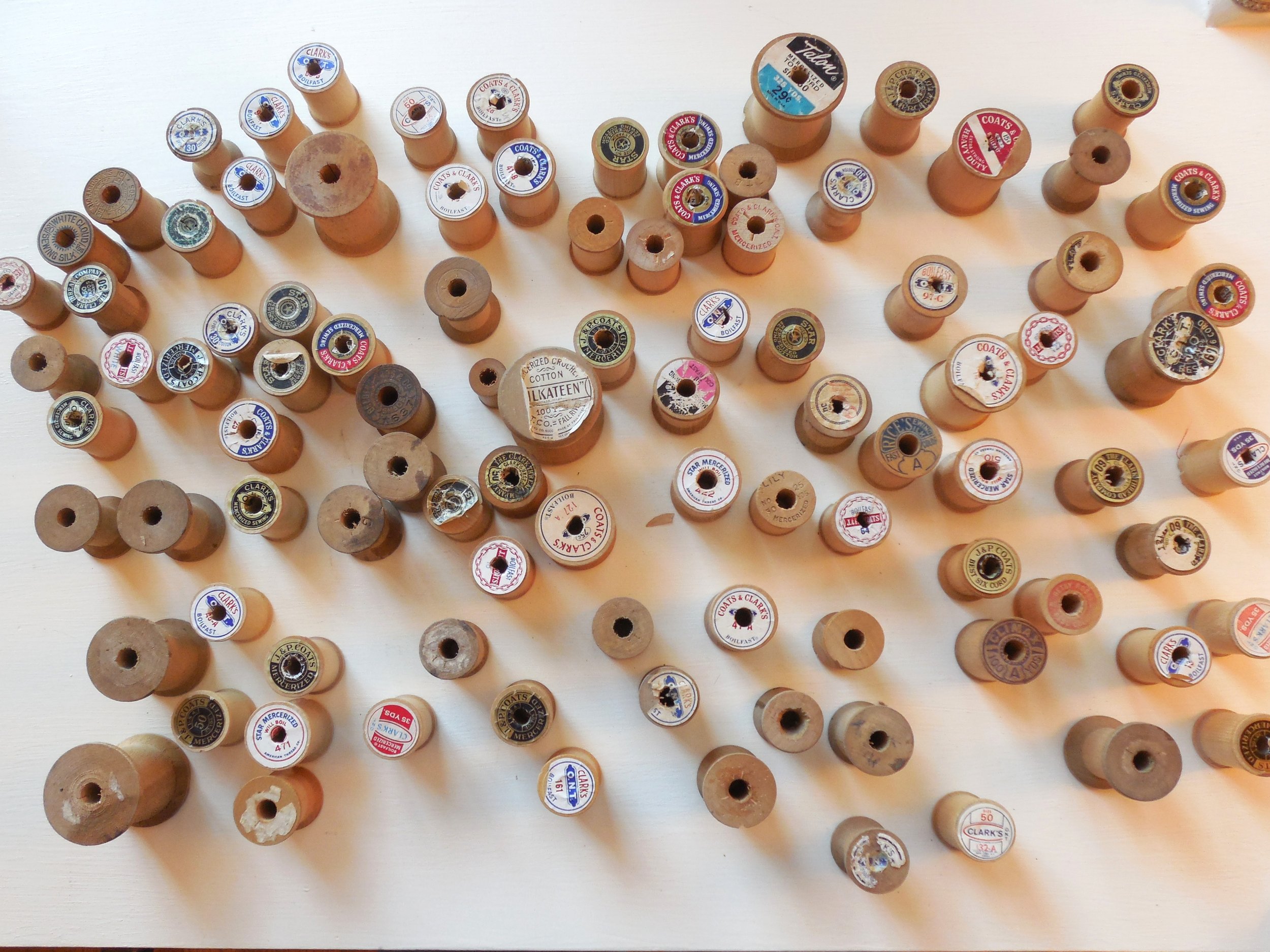
A spool of thread is a language. The tiny round labels on either end are full of words. Terms like ONT or mercerized are familiar, but not necessarily understood. Some are industry-wide standard terms, others proprietary brand language. There is a world of information in the label of a spool of thread. Let’s return to our pink spool of Coats and Clark’s to start the discussion.
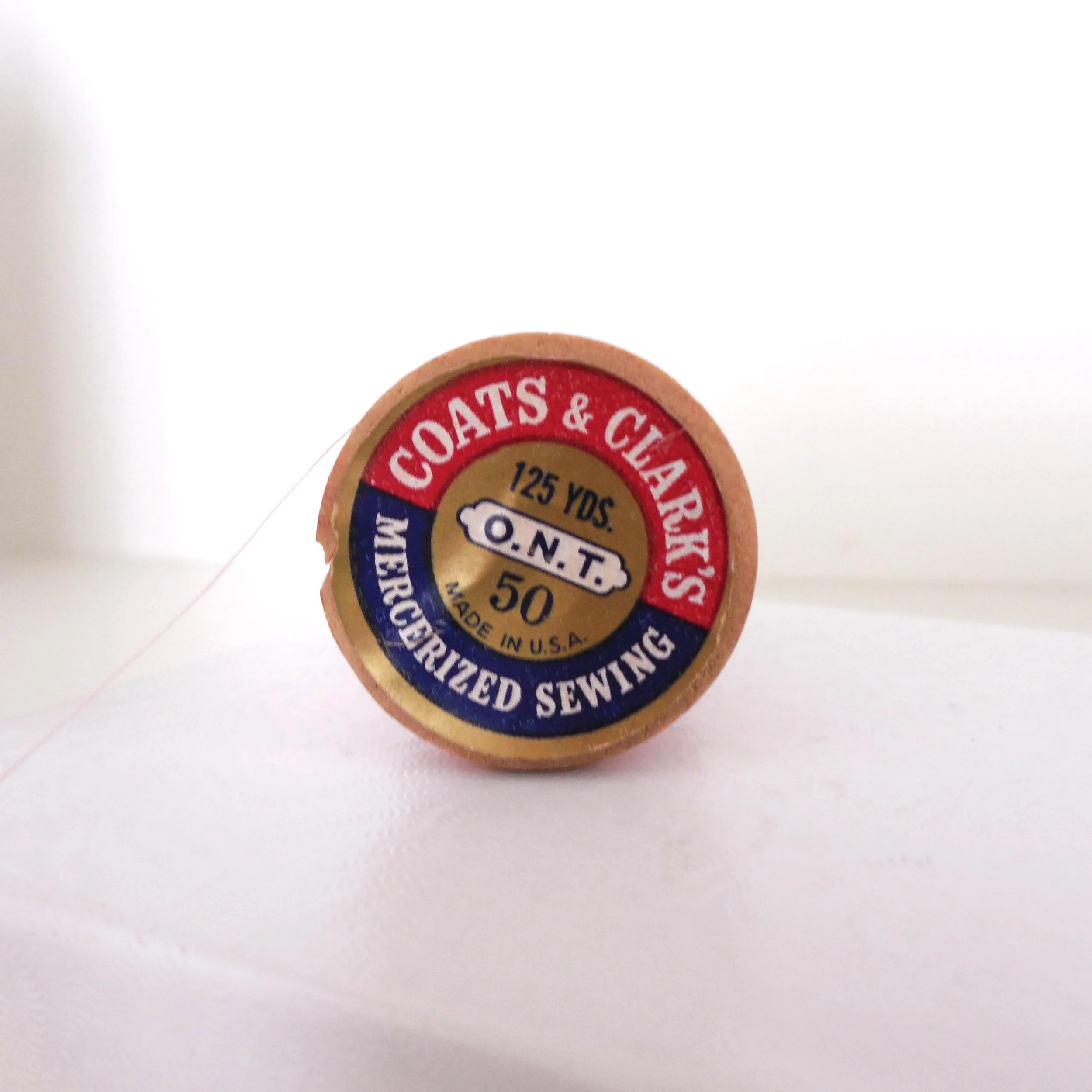
The red, blue, and gold label has the initials O.N.T. prominently displayed. What does that mean? Do I need to know in order to decide if this is the product I want? These letters are a brand-specific term that stand for Our New Thread. Manufacturer Clark & Co, long before they were part of Coats and Clark’s, coined the term in the second half of the 19th century to describe a fine, inexpensive cotton thread that was also strong enough to be used in the sewing machine, then another new technology for joining pieces of fabric. Around 1880 Clark’s O.N.T. appeared on the American market. This thread became the industry standard for machine sewing.
A second word on the label that tells me this is cotton thread is MERCERIZED. The process of mercerization was developed in the early 20th century to create an even stronger, smoother cotton thread. It consists of immersing cotton thread under tension into a lye solution (sodium hydroxide) to make it even finer and stronger. It also results in a more lustrous thread that takes dye more easily. I admit to simple admiration for a spool wound with mercerized cotton; it exhibits a characteristic sheen that is one of the joys of dressmaking.
The label on the spool of pink thread also has the number 50, which refers to the thread weight. This is an important number which helps choose a thread for a fabric of a certain weight and also guides the choice of sewing machine needle. The higher the number of the weight, the lighter and finer the thread. The lower the weight number, the heavier and thicker the thread. 50 wt thread is the workhorse of the sewing room, generally used for most clothing construction. A heavier thread, such as 30 wt, may be used for topstitching or buttonholes, a lighter thread, such as 100 wt, for delicate appliqué or other embellishment.
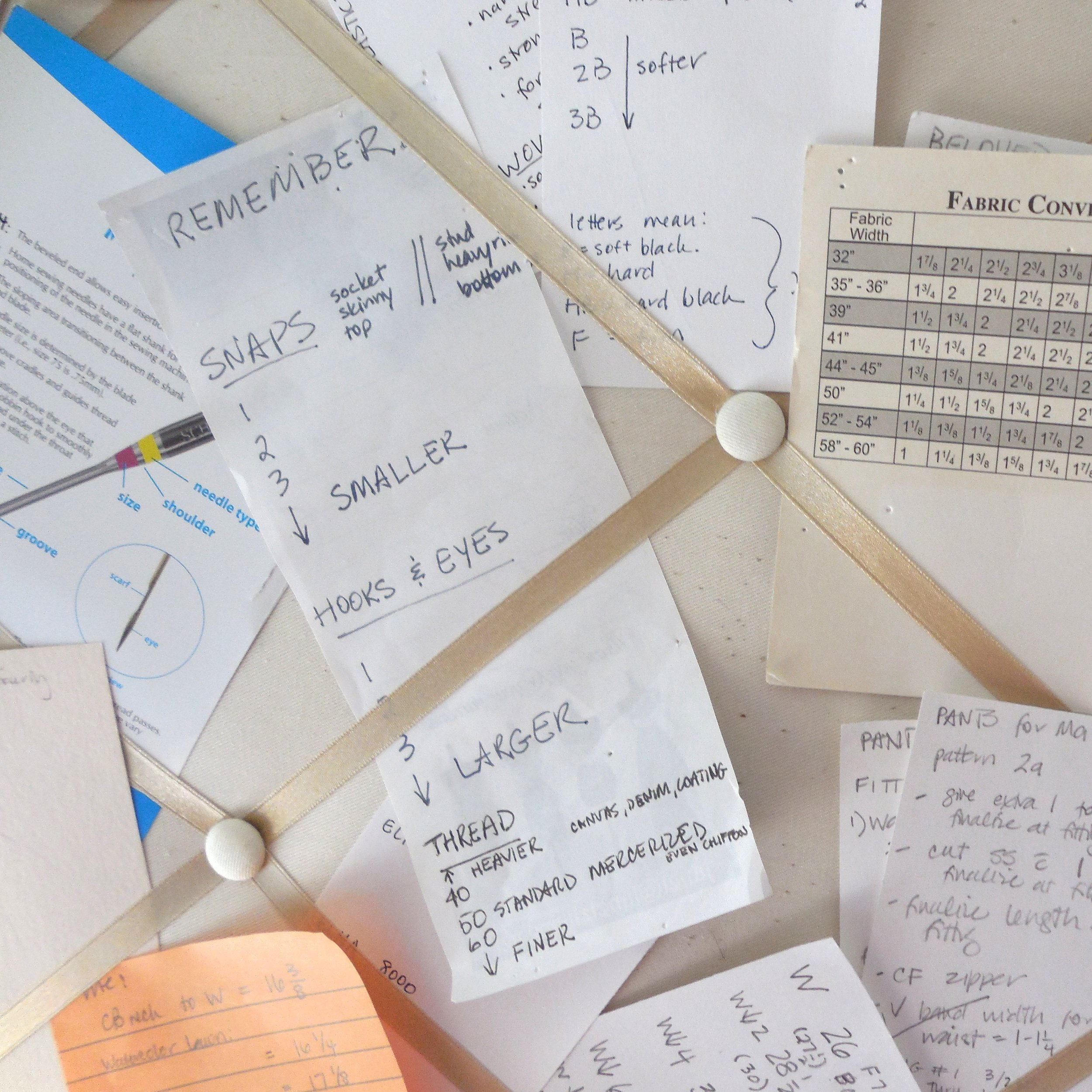
I am not embarrassed to admit that I keep a written chart in the workroom to remind me that thread weight gets lighter as the number increases. Keep in mind that hooks and eyes get bigger and heavier as the size number increases, snaps get smaller, and as if that’s not enough, buttons get bigger as the size number increases.
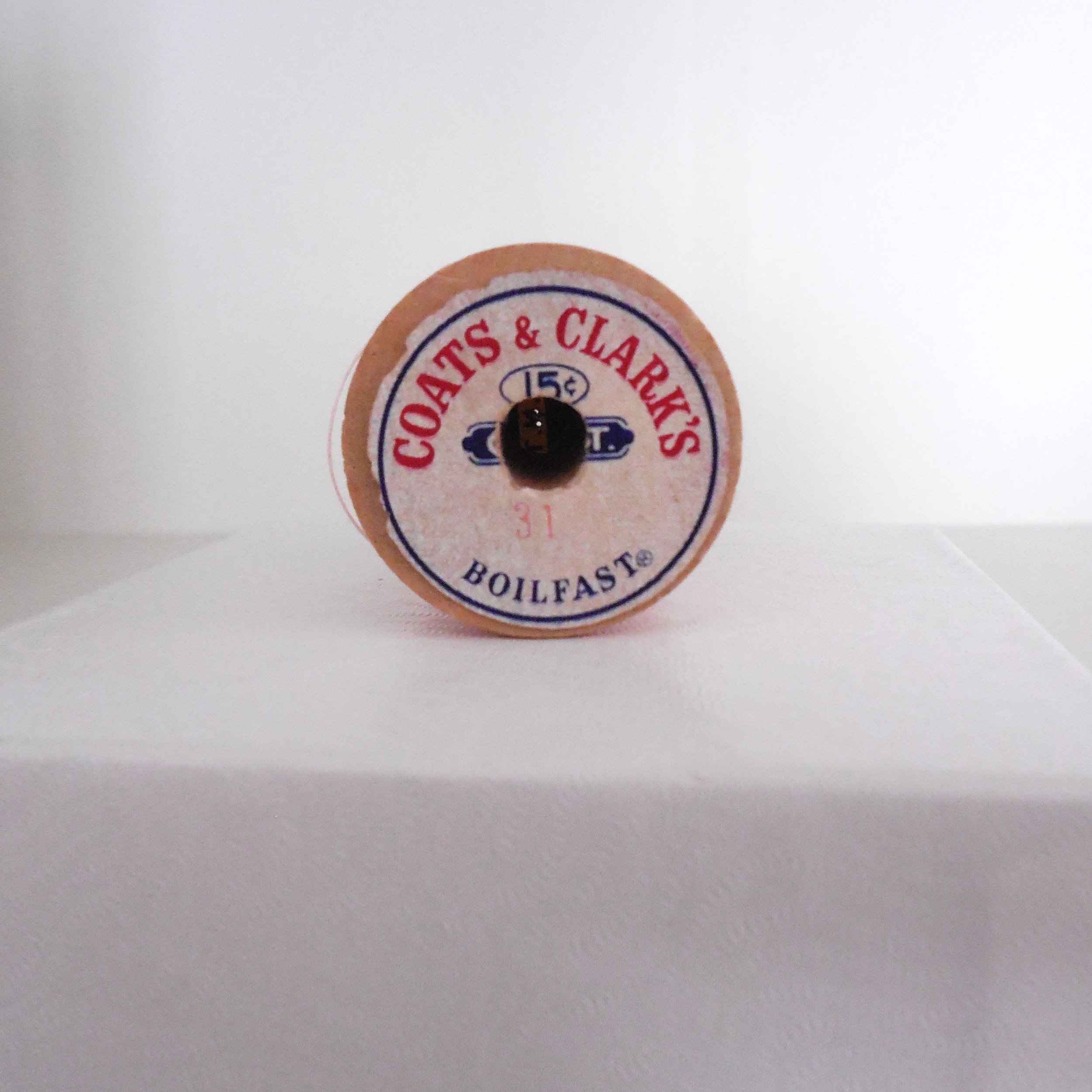
Our pink spool also bears the term BOILFAST®, a registered mark which therefore belongs to Coats and Clark’s. It refers to a chemical treatment of the thread that preserves its color and prevents bleeding, even when exposed to boiling water, a standard laundering technique in earlier periods. Other brands of thread may share this quality, and might be labeled ‘Will Boil’ or ‘Fast to Boiling.’
On the white label end of the spool one also finds a number printed in red. In the case of the spool of thread under discussion that number is a little faded, but it still is visible as a 31. What does it mean?
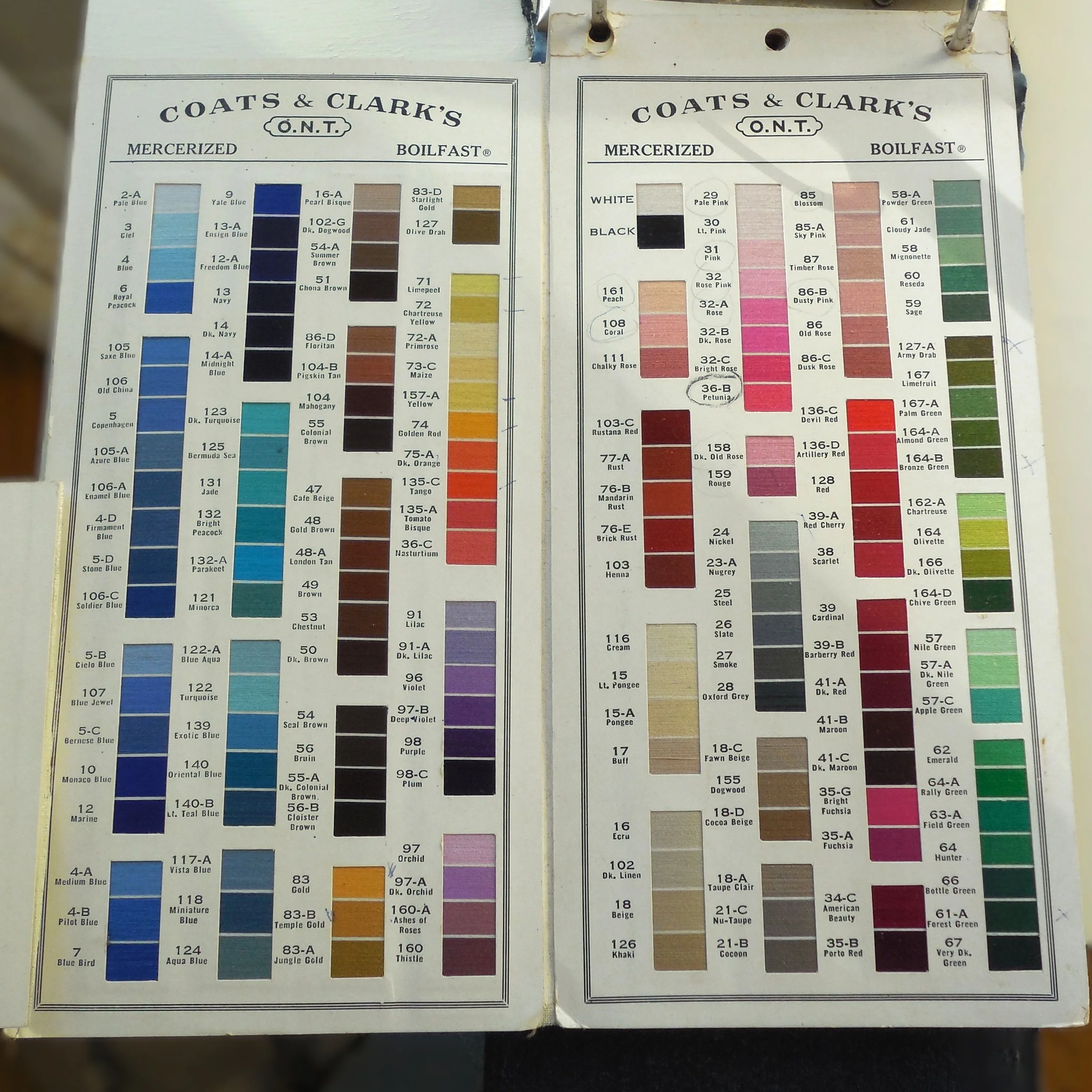
To ask this question is to enter a charmed world, the 180 color choices of Coats and Clark’s ONT mercerized 50 weight from the mid 20th century. A look at a salesman’s sample book from this time tells us quickly that 31 is the color Pink. But that’s only part of the story. Color 29 is Pale Pink, 30 Light Pink, 32 Rose Pink, 32-A Rose, 32-B Dark Rose, 32-C Bright Rose, and 36-B Petunia. And there are other series of ‘pinks.’ Color number 85 is Blossom, 85-A Sky Pink, 86 Old Rose, 86-B Dusty Pink, 86-C Dusk Rose, 87 Timber Rose, 158 Dark Old Rose, and 159 Rouge, 161 Peach, 108 Coral, and 111 Dusky Rose.
To see such distinctions among the many shades of a color is to feel that one is among friends. Like minded individuals who care that some pinks have a blue undertone, others an orange. That some are warmed up with a drop of brown, others cooled with gray. And why do some colors get A, B, and C variants when others do not? What happened to the color numbered 33? Was it replaced by a more popular shade? Not possible to reproduce? The color-inclined want to know.
What does one do with so much color choice? Well, for one thing it has a practical purpose. It allows the merchant to order the array of colors in the quantities that serve the customers. It allows the sewer to purchase more than one spool of thread in the correct color in order to finish the job.
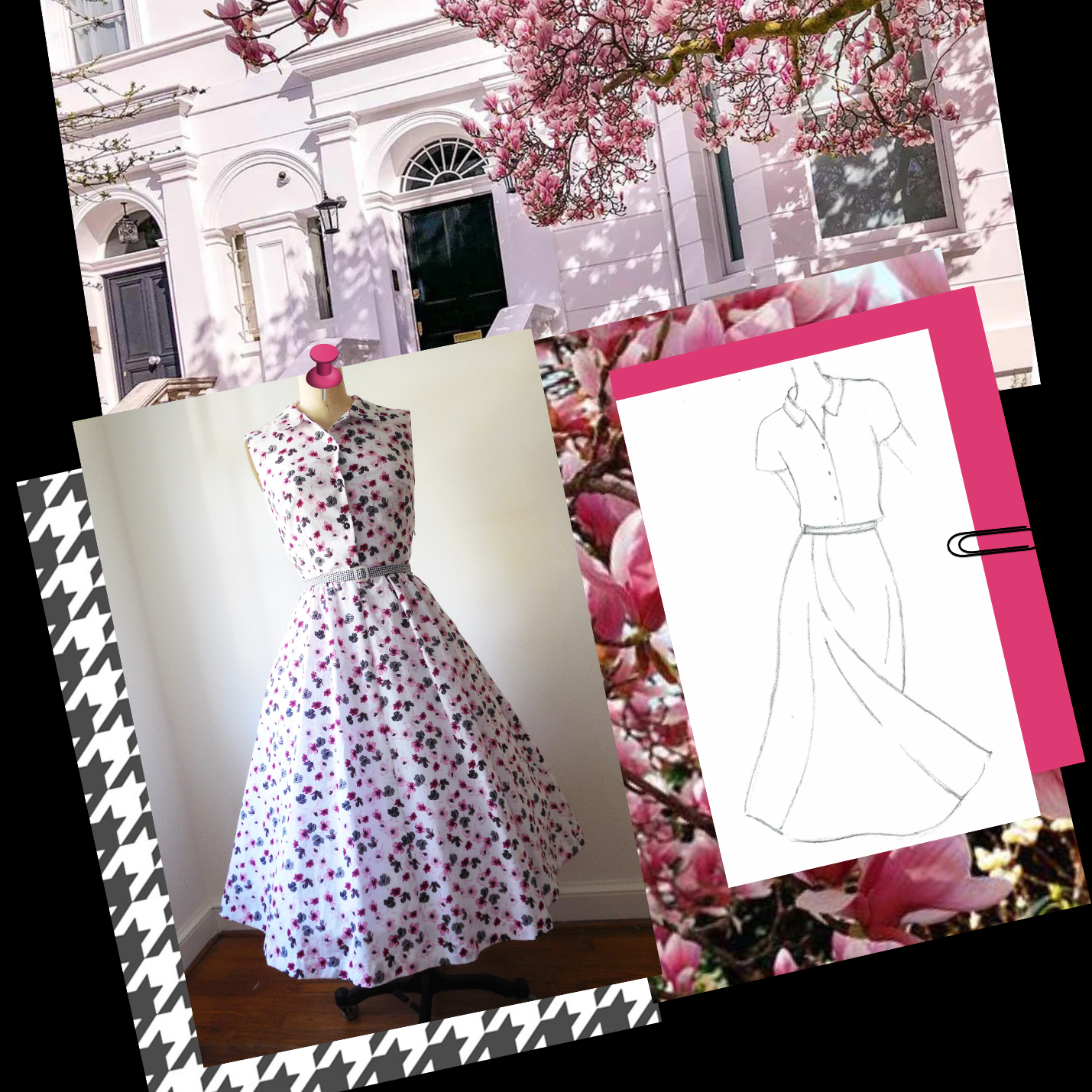
But such a huge array of color also affords a spark of creativity for the designer. A heightened awareness of the many shades of pink, generously provided by a thread manufacturer, guides the eye when evaluating a fabric for a specific design. Once I saw how a deep pink that leans a little blue conveys the promise of the clear, still-cool days of early spring. It was the launching pad for the 2022 first dress of the season.
Lastly, let us look at the price of this tiny engine of industry. The label states that when it was originally sold, this spool of Coats and Clark’s thread cost 15¢. The label also helpfully tells us it is loaded with 125 yards of ONT MERCERIZED. That works out to 0.12¢ per yard.
So how old is this spool of mercerized cotton that cost 15¢? There is no simple answer, but here are some guidelines. A 1956 Coats and Clark’s advertisement from Woman’s Day magazine stated that 100 yard spool of mercerized sewing thread cost 10¢, which works out to .10¢ per yard. But the ad also says that a 400 yard spool of the same thread only cost 29¢, or .07¢ per yard. So in addition to its age, the quantity of thread on the spool affects the price. Do we know when this company sold a 125-yard spool of mercerized cotton? A 1961 advertisement in which Coats and Clark’s boasts matching orange thread, zipper, and seam binding shows a 125-yard of mercerized boilfast ONT for 15¢. This star appeared in the magnificent color 135-C, Tango.
So our index spool could be as old as 65 years. Can it sew? Absolutely. I can say from first-hand experience that it holds together a linen blouse that buttons and unbuttons, reaches, stretches, tucks in, and is washed and ironed on a regular basis.
For commercial purposes- ready to wear or custom pieces- new thread is used. But for individual samples or pieces for personal use, a decades-old spool of thread can do a fine job.
How does one know if an old spool of thread is strong enough for clothing construction? Unwind a little thread and give it a sharp snap. If it breaks easily, it’s better not to use it for this purpose. But take a closer look at the thread. Unwind a little more. Do the underlying layers look brighter? Try the snap test again. The thread that hasn’t been exposed to sunlight and dust may be stronger. And even if a thread is no longer strong enough for clothing construction, it still has a role in marking, and, yes, in design.
Old mercerized cotton is good thread. It’s lustrous, fine, strong and a font of color creativity. I sew with it whenever I can. I’m especially pleased to extend its useful life. This brings me to a subject of some delicacy, the caged spool. So often while shopping I see jars of old spools of thread, thrown in a jumble with the lid screwed on tight. Each spool has yards and years of useful life left in it, and yet it is imprisoned under glass. I understand where the impulse comes from. Old spools come in a variety of pleasing shapes; the wood is smooth and mellow, the thread colors dazzling. Let me propose an alternative. Sew. By hand, by machine. Get the spool of thread to the finish line. Keep the empty spools. They are meant for the sewer’s trophy room.